The first win
Reed's first public performance ended with a high-school talent-show victory. It was the first proof that the private obsession could connect with a real audience—and it removed any chance of him choosing a normal career.

Meet Reed Masterson
Long before the theatres, television appearances, and thousands of miles on the road, there was a six-year-old kid in Kentucky and a cardboard box full of magic tricks.
Illusionist. Photographer. Designer. Actor. Broadcaster. Professional troublemaker. The titles change; the curiosity does not.
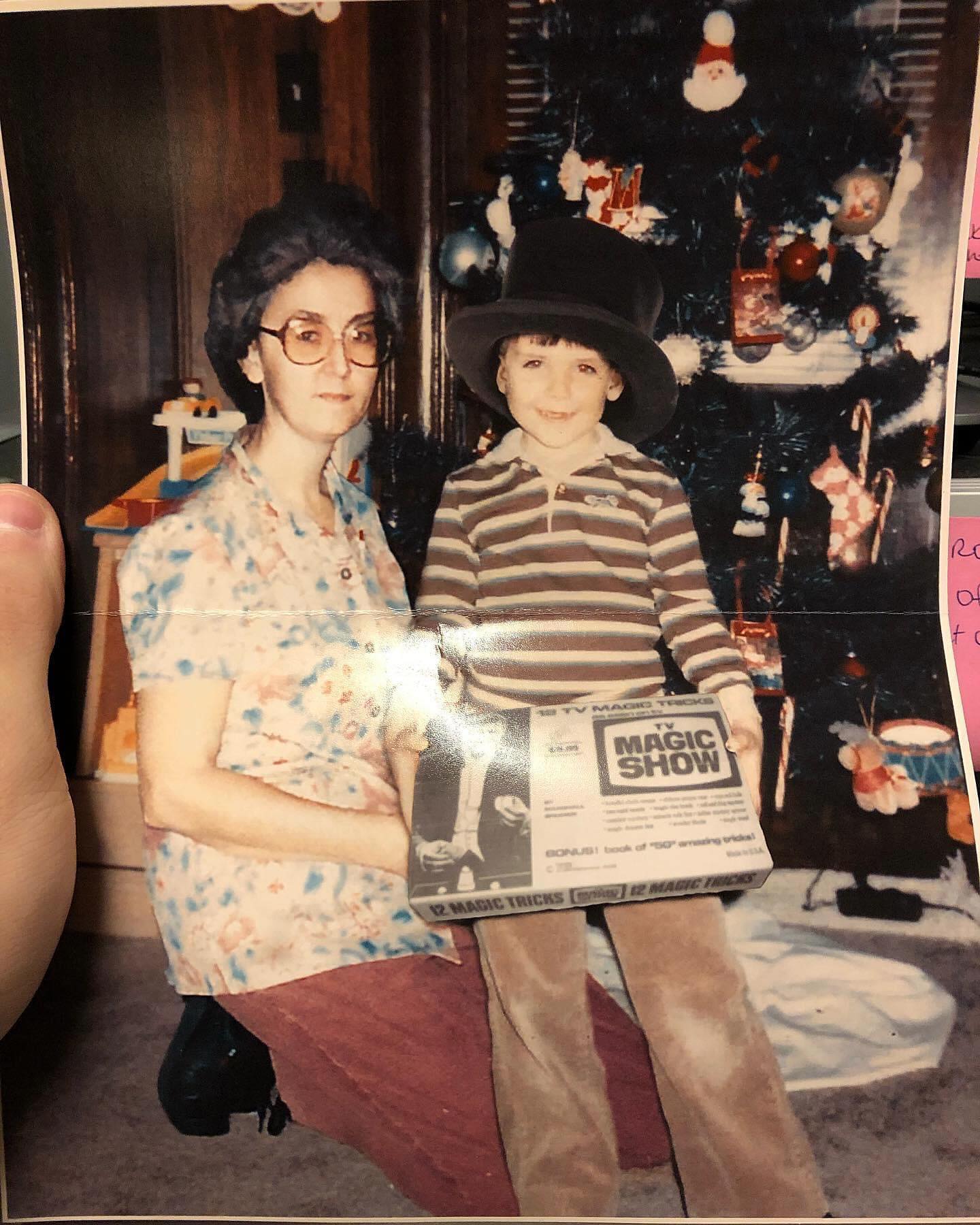 Reed and Nanny
The first believer
Reed was raised by his great-aunt, known simply as Nanny. She believed in him before there was a stage, a tour, or much evidence that the cardboard-box magic operation had a future.
When six-year-old Reed became fascinated with magic, Nanny helped turn that imagination into something tangible. She helped him build tricks, encouraged the obsession, and became his first—and most faithful—audience.
That relationship is still part of the show. Enchantment, the emotional finale of Theatrical Deceptions, is dedicated to her and to the person who made the impossible feel possible long before anyone else was watching.
“Forever my biggest fan”
The road from there
A childhood obsession became a hometown show, then a touring production, then a career built across theatres, television, film, festivals, and stages at sea.
There was no clean handoff from “kid with magic tricks” to professional illusionist. Reed learned by producing the shows himself—finding the rooms, building the material, designing the advertising, solving the technical problems, and getting back on the road to do it again.
Reed's first public performance ended with a high-school talent-show victory. It was the first proof that the private obsession could connect with a real audience—and it removed any chance of him choosing a normal career.
His ROHS Opera House debut began an eleven-year run of sold-out hometown productions. Those annual shows became a laboratory for bigger illusions, stronger storytelling, and the discipline required to build an audience year after year.
Original productions expanded across the United States, at times covering more than 40,000 miles a year. The work moved through theatres, colleges, fairs, festivals, corporate events, and unconventional rooms that demanded a different solution every night.
Touring with Hellzapoppin, appearing on television, and working in independent film introduced Reed's controlled chaos to entirely new audiences. Each format sharpened a different part of the performer: timing, presence, adaptability, and storytelling.
Today, Reed performs internationally aboard major cruise lines while rebuilding the next land-based chapter of Theatrical Deceptions. The venues keep changing; the goal remains the same—make the room feel that anything could happen.
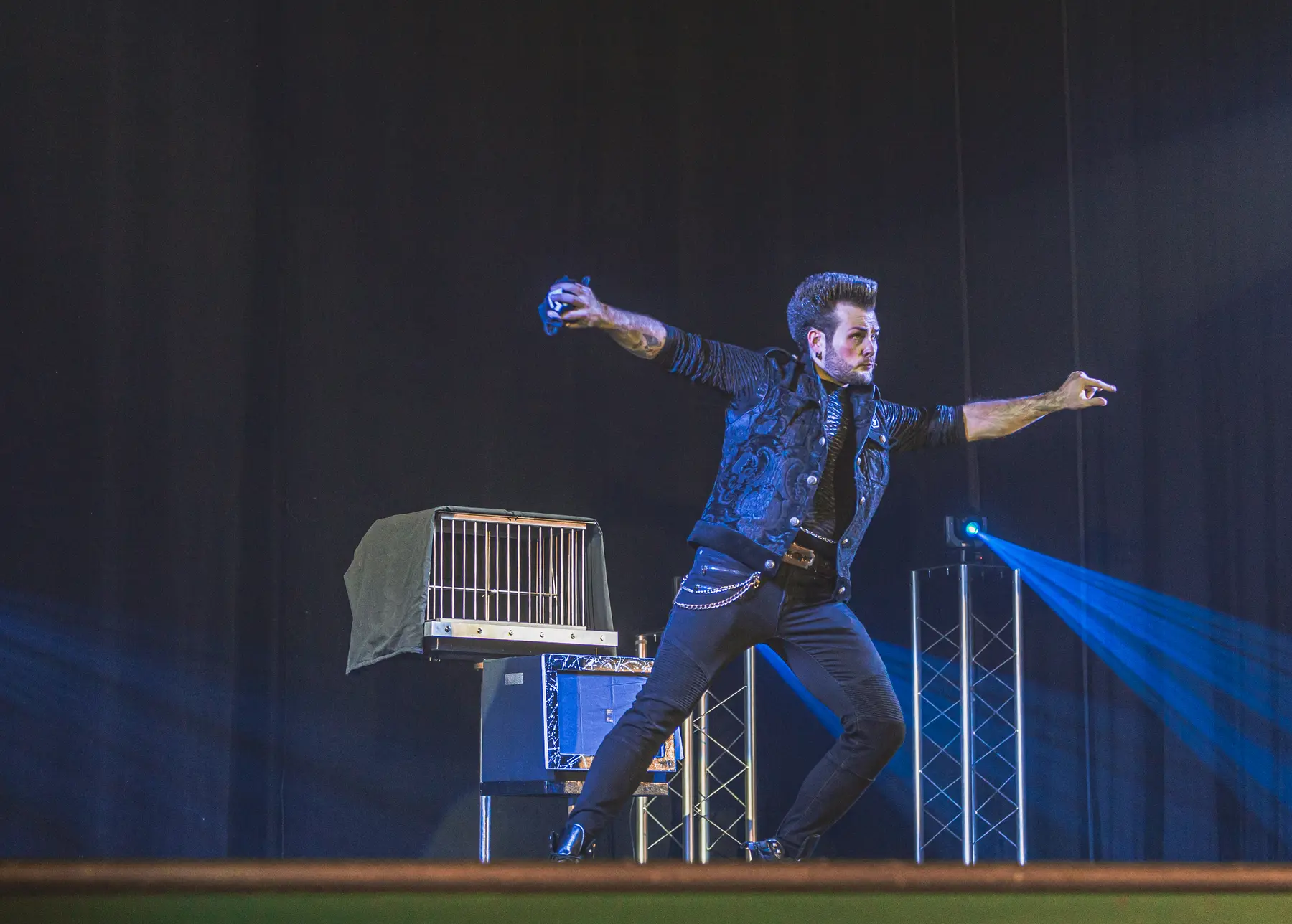

Live performances in theatres, on cruise ships, at colleges, festivals, and everywhere in between.
U.S. states reached—and more than enough highway stories to make a questionable memoir.
Television and film appearances across national networks, streaming platforms, and independent productions.
Countries and counting, with the next passport stamp never too far away.
Early recognition
Before the cruise ships and television appearances, Reed was already earning recognition on stages across the country. These selected competition honors helped mark the beginning of a career that would soon move far beyond the contest stage.
The contests were never the destination. They were early checkpoints—evidence that the staging, originality, and audience connection were beginning to stand out. The more lasting recognition came afterward through returning venues, sold-out hometown productions, press coverage, and audiences who kept inviting Reed back.

Wesley Manor Talent Preliminary

Coca-Cola Talent Classic

Dr. Robert Escher Stage Contest

Winter Carnival of Magic Stage Contest
Right now
Reed is currently appearing aboard MSC World America while developing the next evolution of his touring illusion show, expanding his creative work, and continuing the lifelong project of turning strange ideas into real experiences.
The work rarely stays in one lane. A new illusion may begin as a sketch, become a prop in the workshop, need its own music and lighting, and eventually grow into an entire theatrical moment. That constant movement between performer, producer, designer, and problem-solver is where Reed is most at home.
The next chapter is focused on bringing the large touring show back to land while building a stronger one-man production that can travel farther without losing its theatrical scale. That means developing new material, refining older pieces, rebuilding equipment, shaping the visual world around the show, and continuing to learn skills that may not have an obvious purpose—right up until they become the missing piece.
Beyond the job title
The main event. Reed creates and tours theatrical magic built around illusion, danger, audience connection, comedy, and a larger-than-life live presence.
The posters, visual identities, promotional campaigns, photography, and much of the machinery surrounding the shows begin at Reed's own desk.
From television appearances and film work to interviews and original media projects, the camera has become another kind of stage.
Years in radio management and on-air work sharpened the instincts behind the microphone: timing, storytelling, promotion, and knowing how to hold an audience.

Beyond the stage
Reed's work on camera has included television appearances, independent productions, and a co-starring role in a short film. When the production team also connected with his graphic-design work, he was asked to create the film's poster—putting him on both sides of the finished image.
It is a particularly Reed kind of credit: performer, designer, and professional overachiever, all on the same project.
See the original postOffstage
When he is not building or performing a show, Reed is usually behind a camera, playing drums, juggling, riding a Onewheel, hiking, kayaking, or exploring forgotten places. The common thread is curiosity—preferably with a little motion and just enough questionable judgment to make the story worthwhile.
Photography gives him another reason to notice what most people pass without seeing. Music keeps the rhythm sharp. Travel, old buildings, back roads, and unfamiliar places keep feeding the part of his brain that is always asking what else might be hidden there. Even away from the spotlight, Reed is rarely very far from the next idea.
The story continues onstage